The Core Processes of Serum OEM
The core process of Serum OEM involves full-chain collaboration from requirement confirmation to finished product delivery, covering multiple stages such as R&D, production, quality inspection, and logistics. Below is a detailed analysis to help brand owners efficiently advance projects and ensure product quality:
I. Requirement Communication and Project Initiation
Define Brand Positioning
Target Audience: Age, skin type (e.g., sensitive, oily), and consumption scenarios (e.g., daily care, emergency repair).
Core Efficacies: Whitening, anti-aging, moisturizing, repairing, etc. Differentiated selling points should be determined based on market trends (e.g., "Clean Beauty," "Precision Skincare").
Price Range: Set a reasonable range based on cost structure (raw materials, packaging, production) and the purchasing power of the target market.
Regulatory Requirements: Confirm target market regulations (e.g., full ingredient labeling in China, prohibited preservatives in the EU) to avoid subsequent compliance risks.
Screening OEM Manufacturers
Qualification Verification: Check production licenses, ISO22716/GMPC certifications, and international certifications (e.g., EU COSMOS, US FDA).
Capability Assessment: Inspect R&D teams, production scale, equipment advancement (e.g., automated filling lines), and past cooperation cases (especially for similar categories).
Service Matching: Confirm support for small-batch customization, rapid re-ordering, and one-stop services (e.g., packaging design, logistics distribution).
Signing Cooperation Agreements
Clearly define terms such as formula ownership, delivery dates, payment methods, quality standards, and liability for breach of contract to protect the rights of both parties.
II. Formula R&D and Sampling
Formula Design
Basic Framework: Select core ingredients based on efficacy (e.g., Hyaluronic Acid for moisturizing, Niacinamide for whitening, Peptides for anti-aging), paired with emulsifiers, thickeners, and preservative systems.
Technical Innovation: Introduce nano-encapsulation technology to improve ingredient stability or adopt bio-fermentation technology to enhance mildness.
Skin Feel Optimization: Improve the application experience (e.g., refreshing and non-sticky) by adjusting the oil-to-water ratio and adding emollients (e.g., silicone oil).
Sampling and Testing
Small-batch Production: The manufacturer prepares 50g-500g samples; the brand owner tests skin feel, scent, color, and stability (e.g., high/low temperature tests).
Efficacy Validation: Conduct human efficacy evaluations (e.g., 24-hour hydration, 28-day whitening) through third-party testing agencies (e.g., SGS).
Feedback Iteration: The brand owner provides modification suggestions (e.g., increasing viscosity, adjusting fragrance), and the manufacturer optimizes the formula for re-sampling until requirements are met.
III. Packaging Design and Production
Packaging Selection
Primary Packaging: Choose materials based on serum characteristics (e.g., glass bottles for a high-end feel, plastic bottles for portability, dropper bottles for precise dosage).
Secondary Packaging: Design boxes and labels that comply with target market regulations (e.g., production license numbers for China, expiration dates for the EU).
Sustainability: Adopt recyclable materials (e.g., PCR plastic) and reduce excessive packaging to respond to environmental trends.
Packaging Sampling and Confirmation
The manufacturer or brand owner contacts suppliers to produce packaging samples to check size compatibility, printing clarity, and sealing.
Once confirmed, mass production proceeds, with a certain percentage (e.g., 5%) of spare parts reserved for production loss.
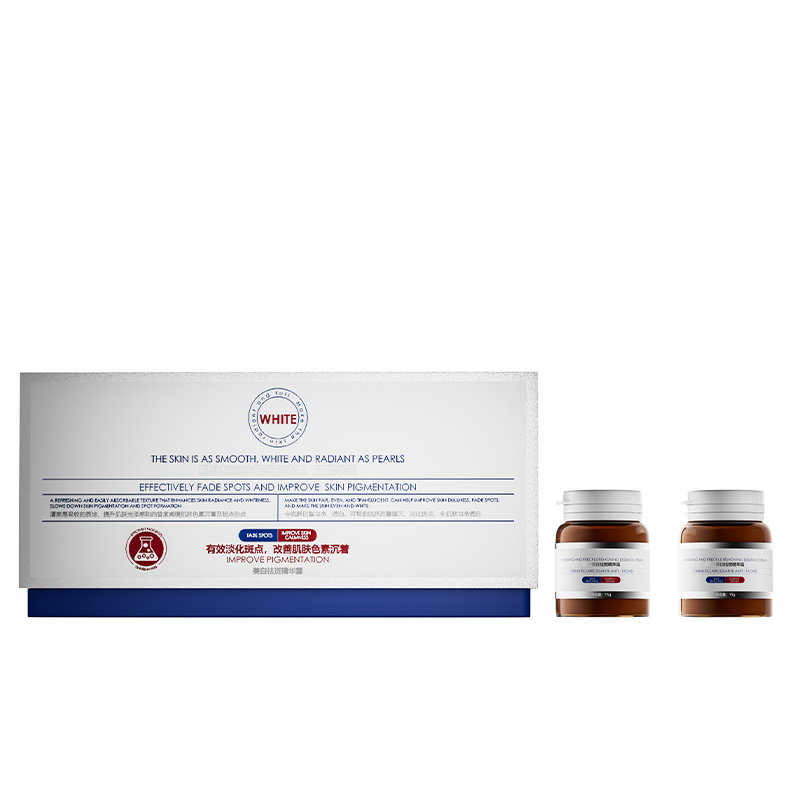
IV. Mass Production and Quality Inspection
Raw Material Procurement and Inspection
The manufacturer purchases raw materials and verifies supplier qualifications (e.g., COA inspection reports, MSDS safety data sheets).
Testing for microbes, heavy metals, and prohibited/restricted substances is conducted on key ingredients (e.g., active ingredients) to ensure quality standards.
Production Process Control
Weighing and Formulation: Precisely weigh ingredients and add them to the emulsification tank in the designated sequence, controlling temperature and stirring speed.
Emulsification and Homogenization: Use high-pressure homogenizers to mix oil and water uniformly to form a stable emulsion.
Filling and Packaging: Complete filling, sealing, and labeling in a cleanroom (e.g., Class 300,000 purification workshop) to avoid contamination.
Batch Management: Assign a unique number to each batch, recording production time, raw material batches, and operators for easy traceability.
Finished Product Inspection
Routine Testing: Test pH value, viscosity, microbes (e.g., total plate count, mold/yeast), and heavy metals (e.g., lead, mercury).
Stability Testing: Place samples under conditions such as high temperature (40°C), low temperature (5°C), and freeze-thaw cycles to observe for separation or discoloration.
Compatibility Testing: Confirm whether the serum reacts chemically with the packaging (e.g., dissolution of harmful substances from plastic bottles).
V. Logistics Distribution and Acceptance
Warehousing and Logistics
The manufacturer stores finished products in GMP-compliant warehouses and arranges logistics according to the brand owner's requirements (e.g., cold chain transport for sensitive ingredients).
Provide logistics tracking information to ensure products arrive at the brand owner's warehouse on time.
Delivery Acceptance
Outer Box Inspection: Confirm no damage or water stains; ensure label information (e.g., product name, specifications, production date) is clear.
Finished Product Sampling: Randomly inspect inner packaging for integrity and leakage, and send samples for re-verification (e.g., microbial testing).
Issue Resolution: If quality problems are found (e.g., damaged packaging, spoiled contents), communicate promptly with the manufacturer for returns, exchanges, or compensation plans.
VI. After-Sales Service and Re-ordering
Market Feedback Collection
Manufacturers assist brand owners in collecting consumer feedback (e.g., skin feel, efficacy, packaging) and analyzing issues (e.g., allergy rates, insufficient viscosity).
Optimize formulas or packaging based on feedback (e.g., adjusting preservative systems to reduce irritation, improving dropper design for easier use).
Rapid Re-ordering Support
Simplify the process for re-orders, requiring only confirmation of quantity, delivery dates, and special requirements (e.g., changing fragrance).
Manufacturers utilize existing formulas and packaging molds to shorten production cycles (e.g., from 45 days down to 30 days).
Key Considerations
Compliance Throughout: Strictly adhere to target market regulations from formula design to finished product labeling to avoid delisting or fines.
Communication Efficiency: Establish high-frequency communication mechanisms (e.g., weekly meetings) to resolve issues in R&D and production promptly.
Allow for Buffer Time: Consider potential delays in sampling, inspection, and logistics; it is recommended to reserve 10%-15% elastic time in the total cycle.
(Some materials on this website are from the internet. If the information displayed on this website infringes upon the intellectual property or other legal rights of media or individuals, please notify us in time, and we will delete it immediately.)